Afterpay Financial Dashboard
Payment commitments, visible before the next purchase.
Interaction design
Product design
Context
Solo concept project. Two- to three-week sprint. Figma prototype.
Tools
Figma, FigJam
Role
UX research and product design.
Year
2025
This project explores how Afterpay could make existing payment commitments more visible within its home screen. The proposed dashboard brings repayment progress, upcoming due dates and spending controls into one connected view. I developed the concept through a Figma prototype, focusing on how financial information could be clear and actionable without making the experience feel punitive.
Seeing the whole commitment
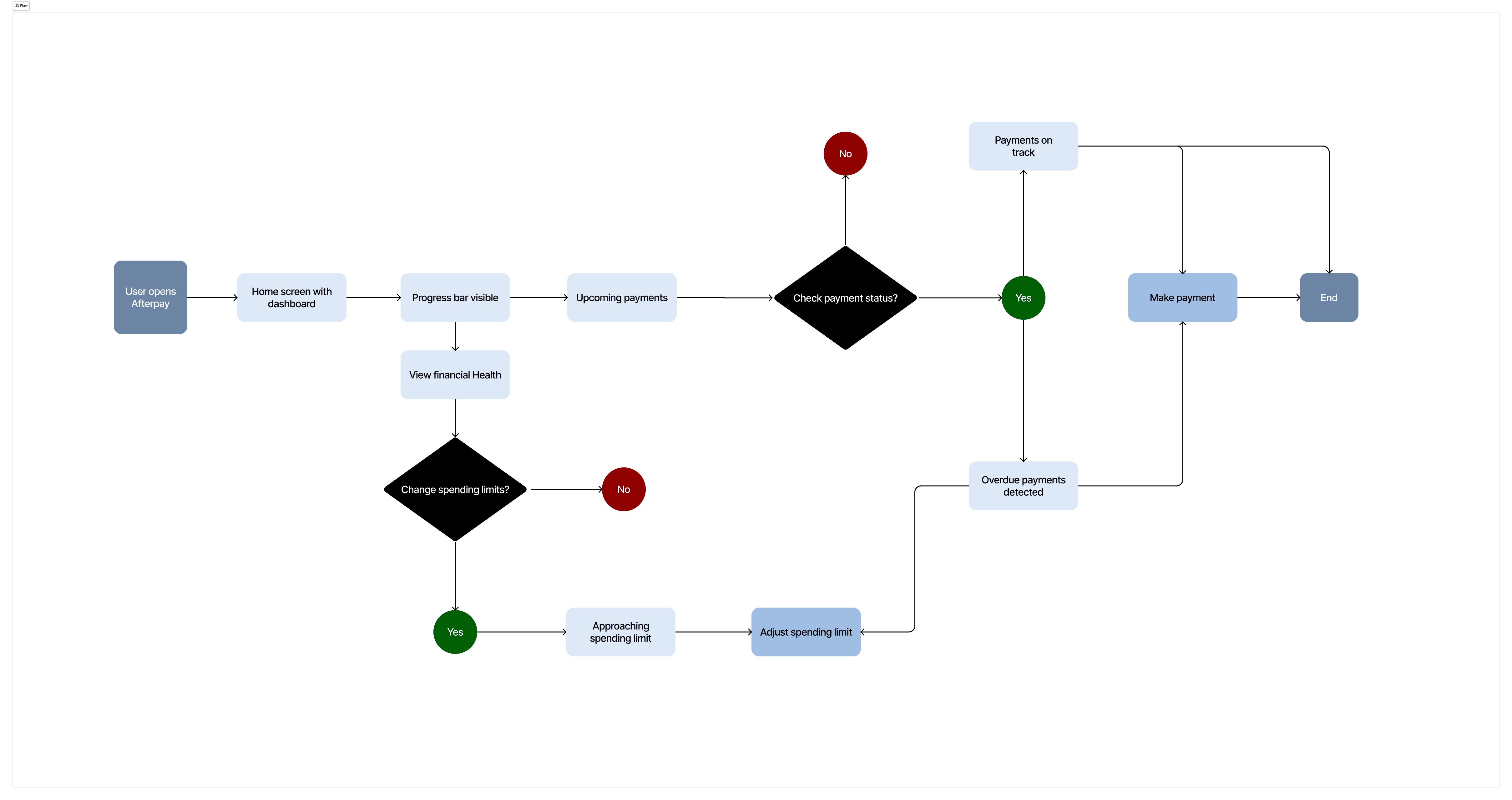
When payments are spread across several orders, looking at one purchase gives an incomplete picture. The dashboard brings those commitments together so someone can understand what remains, what is due next and how their spending relates to a limit they have chosen.
Putting the overview first
The dashboard sits at the top of the home screen, making repayment information part of the normal visit. The overview introduces the current position before the shopping content, with access to more detailed information when someone needs it.
One connected payment view
A progress bar anchors the dashboard, while the detail views expand on balances, due dates and payment status. The Pay Now action connects the information to a next step. The overview and breakdowns describe the same payment state so users can move between them without having to reconcile different summaries.
Setting a personal boundary
The concept includes monthly and merchant-level spending controls, with alerts as a chosen limit approaches. These controls give the user a reference point for future purchases. Status labels need to communicate that relationship clearly, without presenting the dashboard as a complete assessment of someone’s financial wellbeing.
Clarity without judgment
The main design tension was how to communicate urgency without making the interface feel punishing to open. Further testing would examine how people interpret the status labels and whether the spending controls are useful in practice. The prototype establishes a proposed interaction, while its effect on behavior remains a question to investigate.
